
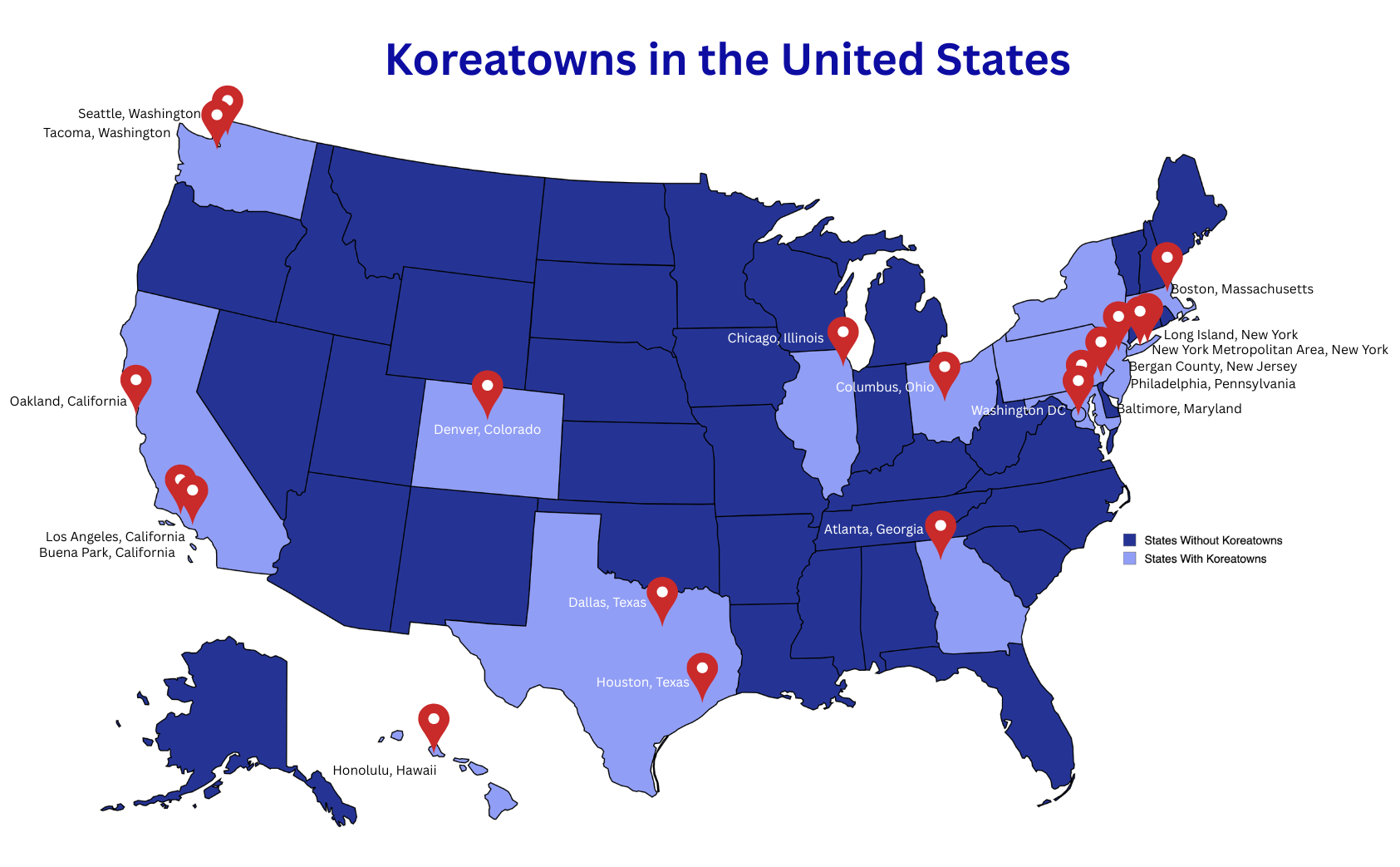
The first mass wave of Korean immigration to the United States dates back to 1902, and Korean Americans have since established 17 thriving Koreatowns across the nation.1a–b For more than 124 years, we have built businesses, created jobs, raised generations of families, invested in our neighborhoods, and helped shape the economic, cultural, and civic fabric of the communities we call home.
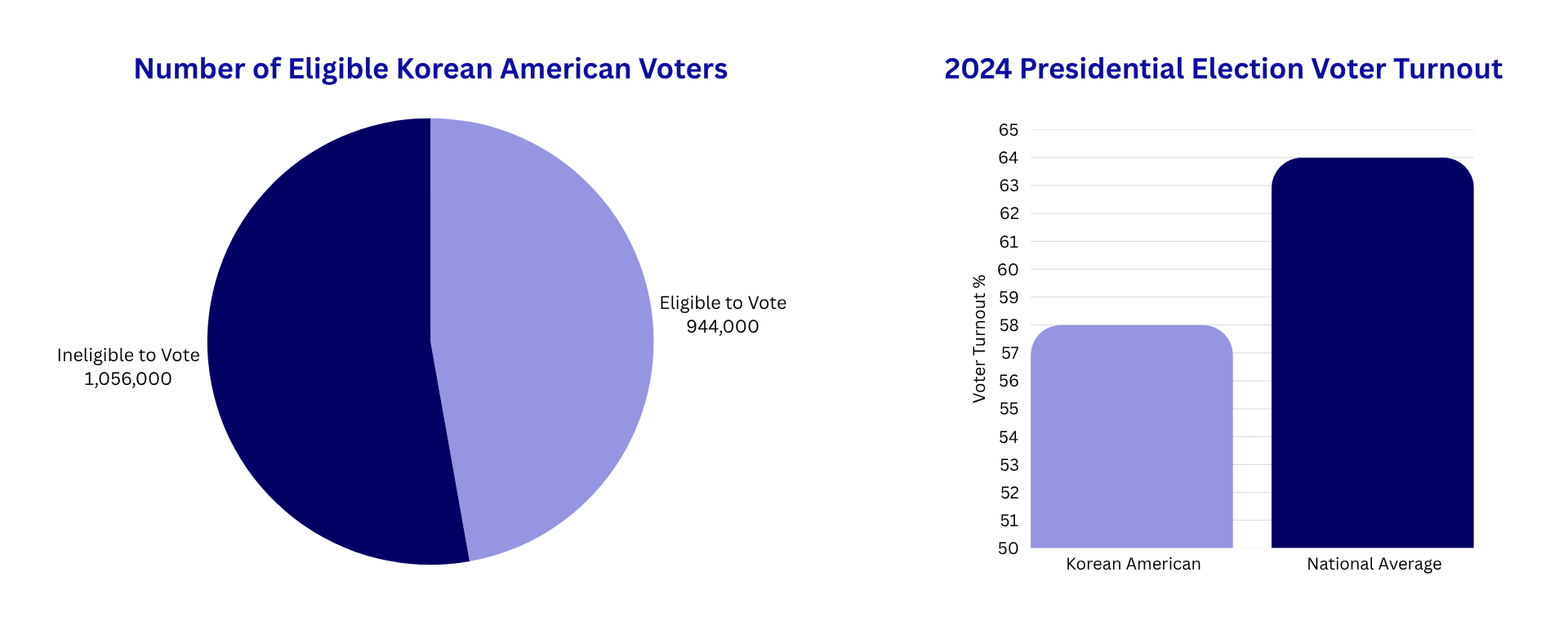
The Korean American population now numbers an estimated 2 million nationwide, including 530,000 in California.2 More than 320,000 reside in Los Angeles, home to the largest Korean community outside of Asia.3 Nationwide, nearly 944,000 Korean Americans are eligible to vote.4
Yet despite our growing population, our political visibility has not always kept pace. In the 2024 Presidential Election, the Korean American voter turnout was 58%, significantly below the national average of 64%.5
Despite Asian Americans being one of the nation’s fastest-growing electorates, Korean Americans remain politically invisible.
This project aims to change that.
Our goal is not simply to encourage more people to vote. It is to make voting more understandable, accessible, and relevant to Korean Americans by providing clear, culturally relevant information about elections and civic participation.
When we vote, we make ourselves visible.
How to Use This Website
🔍 “Current Situation” tab provides further insight into the state of Korean American voter participation.
📝 “2026 Ballot Measures” tab explains the November 2026 California statewide ballot measures in clear, accessible language.
🗳️ “Voting Made Easy” tab provides a step-by-step guide to registering and voting, along with resources to help you through the process.
This guide is provided solely for nonpartisan voter education. KAC does not support or oppose any candidate, political party, or voting choice. Candidate and ballot measure information has been summarized from official election sources. Voters are encouraged to consult the official voter information guide for complete information.
Current Situation
Despite Asian Americans being one of the nation’s fastest-growing electorates, Korean Americans remain politically invisible.
Low civic participation has real consequences.6 The 1992 LA Riots demonstrated the cost of limited political representation; with limited political influence, Korean Americans struggled to receive adequate protection from law enforcement during the riots and government support in the aftermath, resulting in more than 2,200 Korean-owned businesses destroyed and an estimated $400 million in damages.7
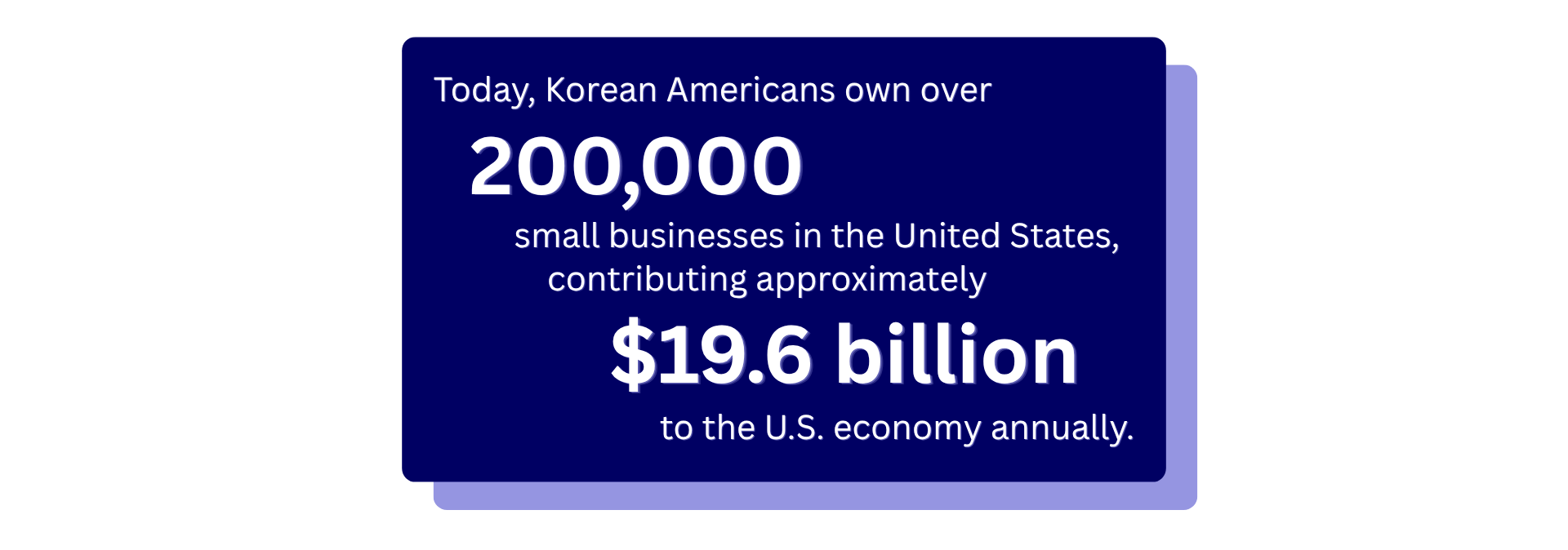
Today, Korean Americans own over 200,000 small businesses in the U.S. and contribute approximately $19.6 billion to the US economy annually.8,9
Yet, without a strong voting presence, Korean American communities remain politically invisible, making it easier for policymakers to overlook their concerns and leave their voices unheard.
In the 2010 California redistricting cycle, Koreatown, Los Angeles was split across 4 of the city’s 15 electoral districts.10 The fragmented structure diffused accountability between four council members, risking deprioritization and neglect of Koreatown’s needs.
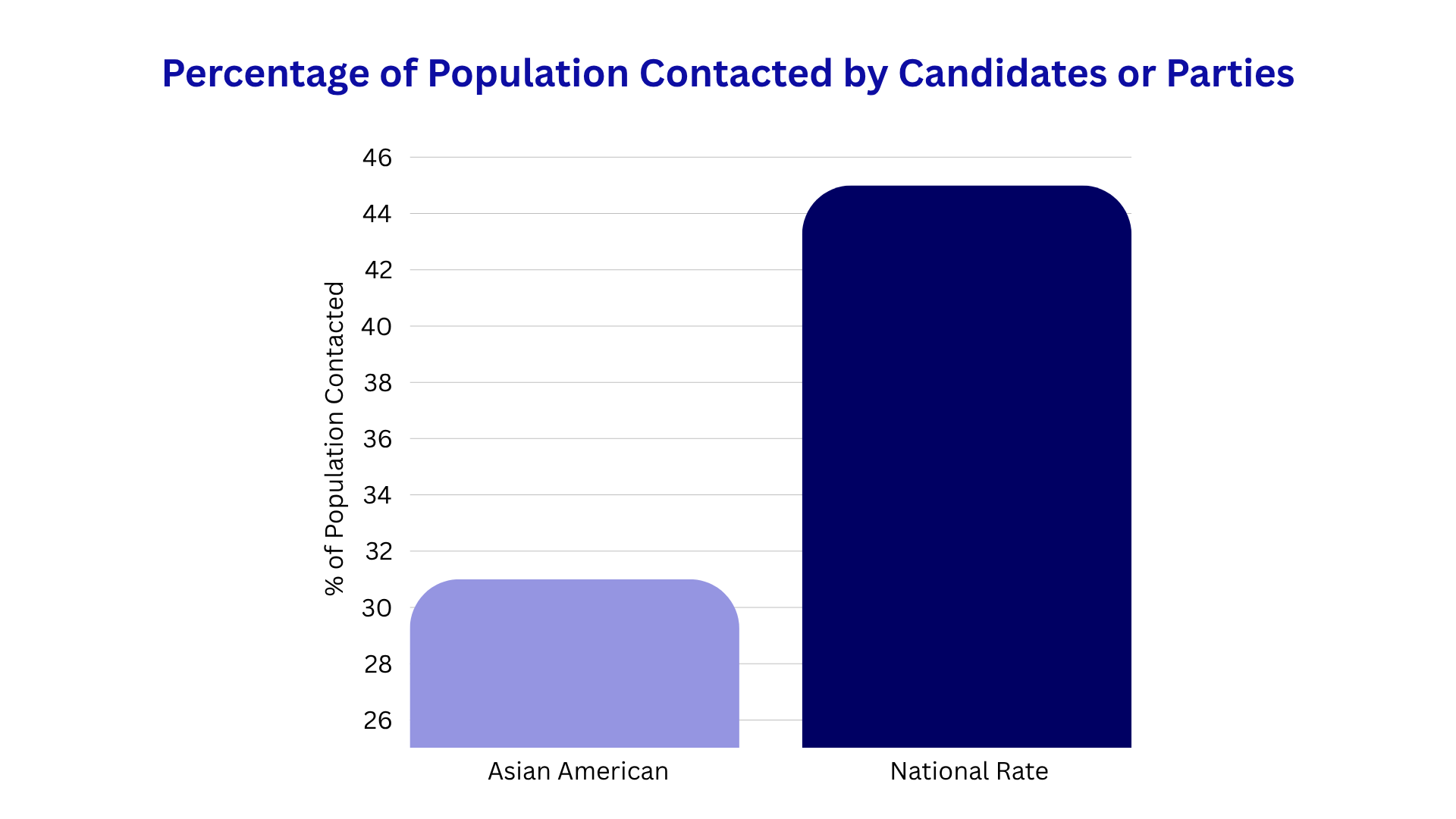
A clear example of the government overlooking the Korean American community was the 2012 presidential election, in which only 31% of Asian Americans reported being contacted by candidates or parties, compared with 53% of Americans nationwide.11
In 2021, the Koreatown Redistricting Task Force, consisting of 10 nonprofits and allies and co-led by the Korean American Coalition, organized 3 town halls and multiple online workshops to inform the community about the benefits of a consolidated council district.12 Later that year, the LA City Council adopted a final map of the new district boundaries, in which the longstanding goal to consolidate Koreatown into a single district was achieved.13
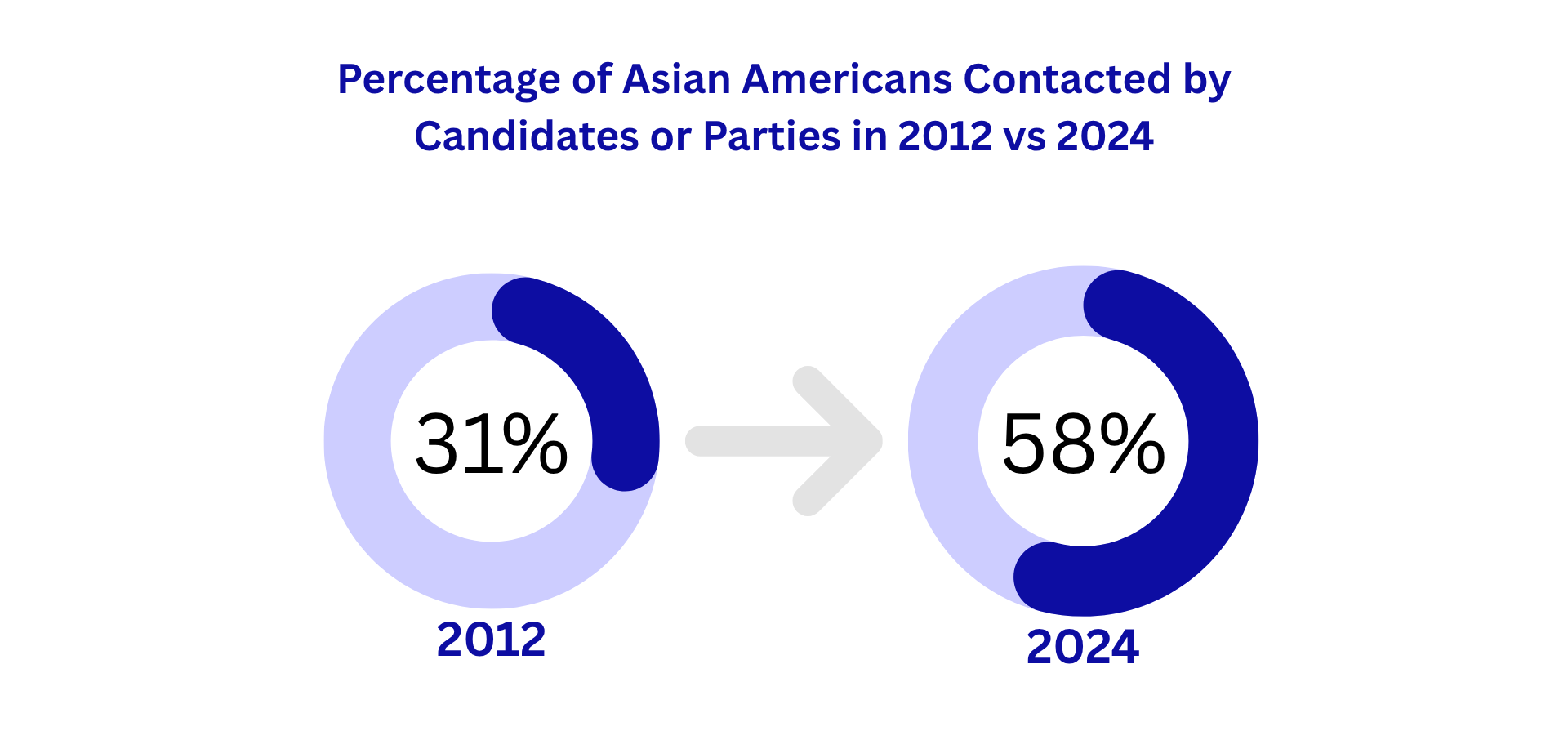
The impact of a unified city council district and stronger community engagement was shown through the 2024 presidential election, when 58% of Asian Americans reported that they had been contacted by either Democratic or Republican parties or candidates, showing significant improvement from 31% in 2012.14
Korean Americans have built thriving communities and made significant economic contributions that shape the US. However, without civic participation, our growing presence will remain invisible.
Voting holds the key to ensuring Korean Americans are recognized, represented, and no longer overlooked.
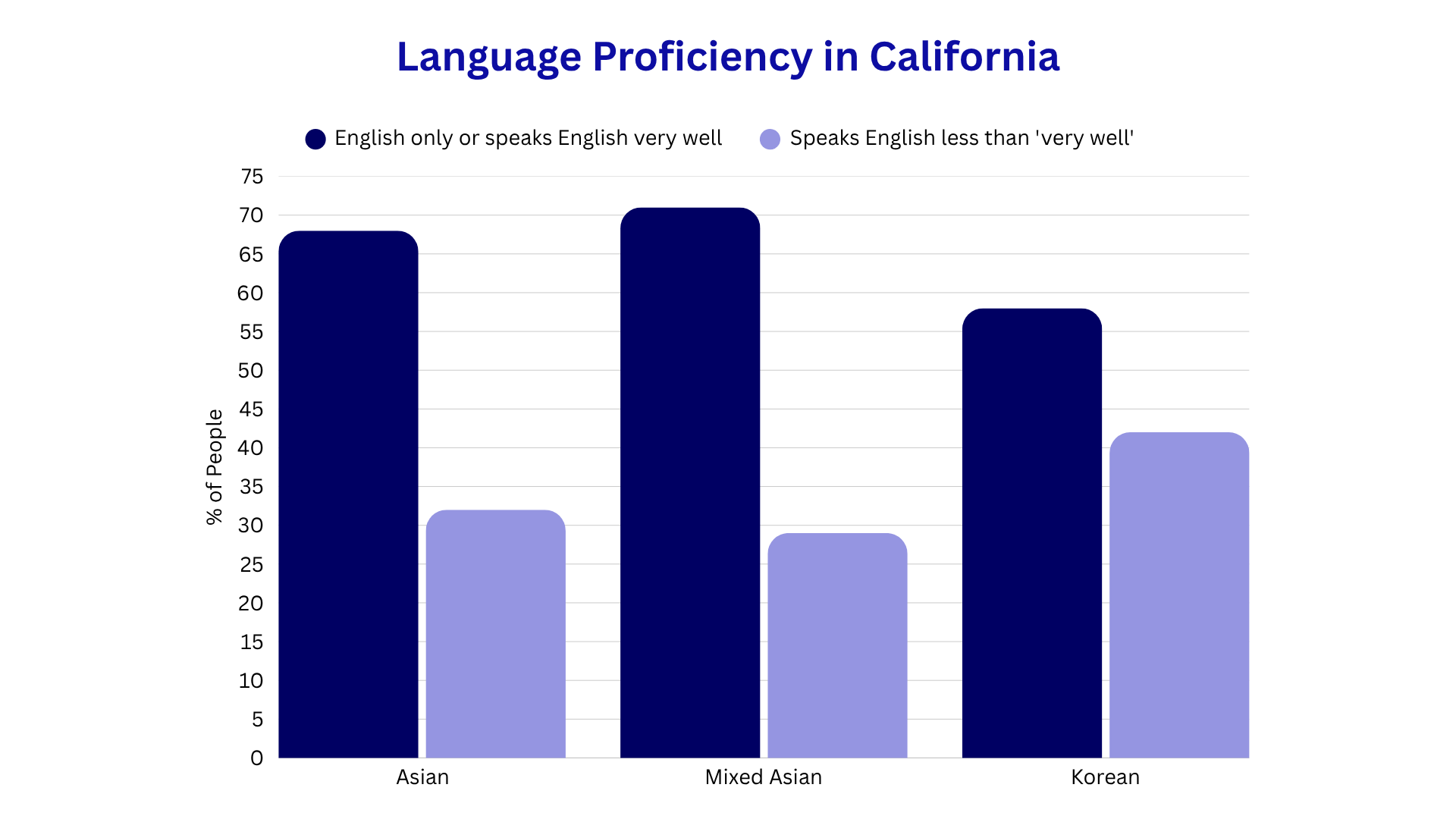
Pew Research found that statewide ballot measures averaged at a 17th-grade reading level, equivalent to graduate-level university coursework.15 This level of complexity poses a barrier for Korean American voters: only 60% of Korean Americans aged 25 and older hold a bachelor’s degree or higher, with even lower rates among Korean immigrants, while just 68% of Koreans ages 5 and older are proficient in English.16
Together, these educational and language barriers can make ballot measures especially difficult to understand and navigate, limiting civic participation.
To help address these barriers, the November 2026 California statewide ballot measures are explained below in clear, accessible language:
2026 Ballot Measures
PROP 1 – THE VETERANS AND AFFORDABLE HOUSING BOND ACT OF 2026
Current Situation: Existing law allows the state to issue bonds to fund affordable housing, homeownership assistance, and veteran housing programs.
Voting YES: Authorizes $11.25 billion in bonds for affordable housing, including funding for veterans, people experiencing homelessness, students, farmworkers, Native American tribes, and first-time homebuyers.
Voting NO: Does not authorize the bonds. Existing housing programs continue under current funding.
Impact: Increases funding for affordable housing and related programs BUT adds $11.25 billion in state debt, which would increase state debt.
PROP 2 – SAVE FOR CALIFORNIA’S FUTURE ACT
Current Situation: California currently limits its Rainy Day Fund (emergency funds) to 10% of General Fund revenues (state money designated for public services).
Voting YES: Increases the Rainy Day Fund cap from 10% to 20%, allowing the state to save more surplus revenue for future emergencies.
Voting NO: Keeps the current 10% cap, with excess revenue continuing to fund schools and taxpayer refunds.
Impact: Creates larger financial reserves to help stabilize the budget during emergencies or economic downturns, BUT the money would not be available for current use (schools/taxpayer refunds).
PROP 3 – FUND SCHOOLS AND HEALTHCARE
Current Situation: California’s voter-approved tax on high-income earners (income of over $360,000 for single filers, $721,000 for joint filers, and $490,000 for heads of household) currently funds K–12 education, community colleges, and healthcare, and is scheduled to expire in 2032.
Voting YES: Makes the existing high-income tax permanent, continuing to fund education and healthcare.
Voting NO: Allows the tax to expire in 2032, reducing state revenue for education and healthcare.
Impact: Continues generating an estimated $5–15 billion annually for state-funded programs.
PROP 4 – CALIFORNIA FAIR ELECTIONS ACT OF 2026
Current Situation: Public money provided by government is prohibited from being used for campaign funding. Candidates running for office may rely on donors, potentially resulting in disproportionate influence on governmental decisions.
Voting YES: Allows public money to be used for campaigning for office with spending limits and criteria to qualify for public funding.
Voting NO: The use of public money for campaign funds continues to be prohibited.
Impact: If the proposition gets passed, tax dollars may be used to influence elections.
PROP 5 – RECALL ELECTION REFORM
Current Situation: Current law requires one election to both recall an elected official and choose a replacement candidate.
Voting YES: Eliminates the simultaneous replacement election. If the Governor is recalled, the Lieutenant Governor would serve as Governor, except during the first two years of a Governor’s term, in which case a special election would be held.
Voting NO: Keeps the current recall process, including the simultaneous replacement election.
Impact: Changes how vacancies are filled after a successful recall election; removes the ban prohibiting recalled officers from running again for the same office.
PROP 37 – CALIFORNIA MIDDLE-CLASS HOMEOWNERSHIP AND FAMILY HOME CONSTRUCTION ACT OF 2026
Current Situation: Creates a state loan program to help middle-income Californians purchase newly built homes.
Voting YES: Establishes a second mortgage loan program for eligible middle-income homebuyers and authorizes up to $25 billion to build new homes.
Voting NO: Does not establish the new loan program.
Impact: No direct tax changes, but could increase home construction and homeownership opportunities.
PROP 38 – CALIFORNIA IMMUNOLOGY RESEARCH AND CURES INITIATIVE
Current Situation: Immunology and immunotherapy use the body’s immune system to treat diseases such as cancer, autoimmune disorders, and infections.
Voting YES: Authorizes $8.4 billion in bonds for immunology and immunotherapy research. Funding would be split between a UC-affiliated research institute and grants for eligible public and nonprofit research institutions.
Voting NO: Does not authorize the bonds.
Impact: Costs the state about $500 million annually for 25 years to repay the bonds. This would not automatically increase taxes, but would be paid from the state’s General Fund.
PROP 39 – CALIFORNIA VOTER ID CHANGE
Current Situation: California generally does not require voters to present a government-issued photo ID when voting.
Voting YES: Requires voters to verify their identity and citizenship at the polls. In-person voters would present a government-issued photo ID, and mail-in voters would provide the last four digits of an approved identification number.
Voting NO: Keeps current voting procedures as is.
Impact: Adds new voter identification requirements and increases state and local costs to administer elections. The measure does not create a new tax, but would require additional government spending.
PROP 40 – BILLIONAIRE WEALTH TAX
Current Situation: This measure was introduced to impose a tax on the billionaires to make up for the deficit in federal healthcare funding.
Voting YES: Imposes a one-time 5% tax on individuals and trusts with more than $1 billion in assets. Revenue would fund Medi-Cal (90%), food assistance (5%), and public schools (5%).
Voting NO: Does not impose the one-time tax.
Impact: Most Californians would not be directly affected. The measure could generate funding for healthcare and education, BUT it raises concerns that it could encourage wealthy individuals or businesses to leave California. Props 40 and 42 are competing measures.
PROP 41 – SPECIAL TAX AUDITS
Current Situation: California’s Constitution limits how much tax revenue the state can spend yearly. Certain types of spending, such as infrastructure, can currently be excluded from this limit.
Voting YES: Requires independent audits of proposed special taxes before elections, and periodic audits after they are enacted. Counting new special taxes toward the state’s spending limit, leaves less room to use the additional tax revenue.
Voting NO: Keeps current law without requiring these audits or additional oversight.
Impact: Does not directly change taxes, but increases oversight and could make excess revenue more likely to be returned to taxpayers or directed to K–14 schools. If both Props 40 and 41 pass, the measure with more “Yes” votes takes effect.
PROP 42 – TAXES ON RETIREMENT SAVINGS
Current Situation: Seeks to prevent future taxes on retirement savings, investments, and personal assets.
Voting YES: Prohibits new taxes on retirement accounts, personal investments, and savings after January 1, 2026, and bans retroactive taxes.
Voting NO: Allows future legislatures to impose these taxes if authorized.
Impact: Protects retirement savings and investments from new state taxes. If both Props 40 and 42 pass, the measure receiving more “Yes” votes takes effect. If both Props 40 and 42 pass, the measure with more “Yes” votes takes effect.
PROP 43 – ACA NO.22 LOCAL TAXES: LIMITATION
Current Situation: Currently, government-proposed local taxes require a two-thirds vote, while citizen-led tax initiatives require only a simple majority (50%).
Voting YES: Requires all local tax measures to receive a two-thirds vote, regardless of who proposes them.
Voting NO: Keeps the current system, where government-proposed local tax measures require a two-thirds vote to pass, while citizen-led local tax initiatives require only a simple majority (more than 50%).
Impact: Makes citizen-proposed local taxes more difficult to pass BUT applies the same approval standard to all local tax measures.
PROP 44 – CLINIC FUNDING AND TRANSPARENCY ACT
Current Situation: Requires Federally Qualified Health Centers (FQHCs) and community-based health clinics to increase patient care funding and financial transparency.
Voting YES: Requires FQHCs to spend at least 90% of revenue on patient care, publicly report spending, and face fines or penalties for noncompliance.
Voting NO: Keeps current funding and reporting requirements in place.
Impact: Increases transparency and directs more funding toward patient care, while requiring clinics to meet new reporting and spending standards.
PROP 45 – EXPEDITED ENVIRONMENTAL REVIEW INITIATIVE
Current Situation: The California Environmental Quality Act (CEQA) requires state and local agencies to disclose significant environmental impacts of proposed projects and adopt all measures to mitigate or avoid damage.
Voting YES: Certain public and private projects would be eligible for review and court challenge procedures. New procedures would shorten time limits for environmental review and reduce the scope of what courts may consider in legal challenges.
Voting NO: Public and private projects continue to use existing project review and court challenge procedures.
Impact: Would shorten the review process for a defined set of essential projects: housing, water systems, clean energy, medical facilities, public safety infrastructure, education, and transportation.
Voting Made Easy
1. Are You Eligible to Vote?
To vote in California, you must meet ALL of the following requirements:
✅ I am a U.S. citizen and California resident.
✅ I will be 18 years or older on Election Day.
✅ I am not currently serving a state or federal prison term for a felony conviction.
✅ I have not been found mentally incompetent to vote by a court.
2. Register to Vote
Prepare the following:
✅ Your date of birth
✅ Your California driver’s license or ID card number
✅ The last 4 digits of your Social Security number
TWO Ways to Register:
1. Online
Register to Vote Online (Takes about 5 minutes)
OR
2. Paper Application
Pick up a voter registration form at your:
📋 Local library
📋 DMV office
📋 U.S. Post Office
3. Vote
THREE Ways to Vote:
1. Vote by Mail
Every active, registered California voter receives a ballot by mail before the election.
Complete your ballot at home, then return it:
📮 By mail (no postage required)
🗳️ At an official ballot drop box
🏢 At any L.A. County Vote Center
You can also track your ballot to confirm it was received and counted.
OR
2. Vote Early
Vote in person before Election Day at an early voting location.
OR
3. Vote on Election Day
Vote in person on Election Day at a polling place or Vote Center. (Polls open 7:00 AM–8:00 PM)
Voting locations also provide language assistance and accessible voting options.
4. Important Dates
📅 October 5 — Ballots begin mailing
📅 October 6 — Ballot drop-off locations open
📅 October 19 — Last day to register to vote
📅 November 3 — Election Day (Polls open 7 AM–8 PM)
Voting by mail? Your ballot must be postmarked by November 3 and received by your county elections office by November 10.
Miss the October 19 deadline? California offers Same Day Voter Registration through Election Day.